
Ohio Property Tax Records
Ohio property tax records are public documents kept by the County Auditor in each of the state's 88 counties. You can search them online in most counties to find property values, tax bills, and owner names. Each county runs its own search tool, so the process can vary a bit from place to place. The Auditor sets the value of each parcel, and the Treasurer sends out the tax bills. If you need to look up a piece of land, check who owns it, or see what someone paid in taxes, these records are where you start. Most county auditor websites let you search by address, owner name, or parcel number for free.
Ohio Property Tax Overview
How Ohio Property Tax Records Work
Ohio property tax records start with the County Auditor. The Auditor is the chief assessor for real property in every Ohio county. They figure out the market value of each piece of land and every building on it. That value gets set at 35% for tax purposes, which is the assessed value. Tax rates are then applied to the assessed value to come up with your bill. The rate is measured in mills. One mill equals one dollar for each thousand dollars of assessed value.
The Ohio Department of Taxation oversees the whole system. They set rules, check that counties follow them, and provide guidance on how property should be valued. But the real work happens at the county level. Each Auditor's office has staff who view properties, update records, and handle complaints about values.
Under ORC Chapter 5713, every county must do a full reappraisal of all real property once every six years. This is called the sexennial reappraisal. Three years later, a triennial update adjusts values based on market changes without a full inspection. House Bill 920 plays a big role too. It keeps tax collections steady by applying reduction factors when property values go up. So even if your home's value jumps 20%, your taxes don't go up by the same amount on existing levies.
The Treasurer collects the taxes. Bills go out by the end of December. The first half is due by January 31. The second half is due by July 31.
Ohio Department of Taxation Resources
The Ohio Department of Taxation is the state agency that manages tax policy and administration across Ohio. Their site has tools for property owners, local officials, and anyone who wants to understand Ohio property tax records.
The department's property tax page lays out the basics of how the system works. It covers assessment rules, payment schedules, and exemption programs. You can also find links to each county's auditor website from there. The research and policy section has data on tax rates, collections, and trends statewide. It is useful if you want to compare rates across counties or track how values have changed over time.
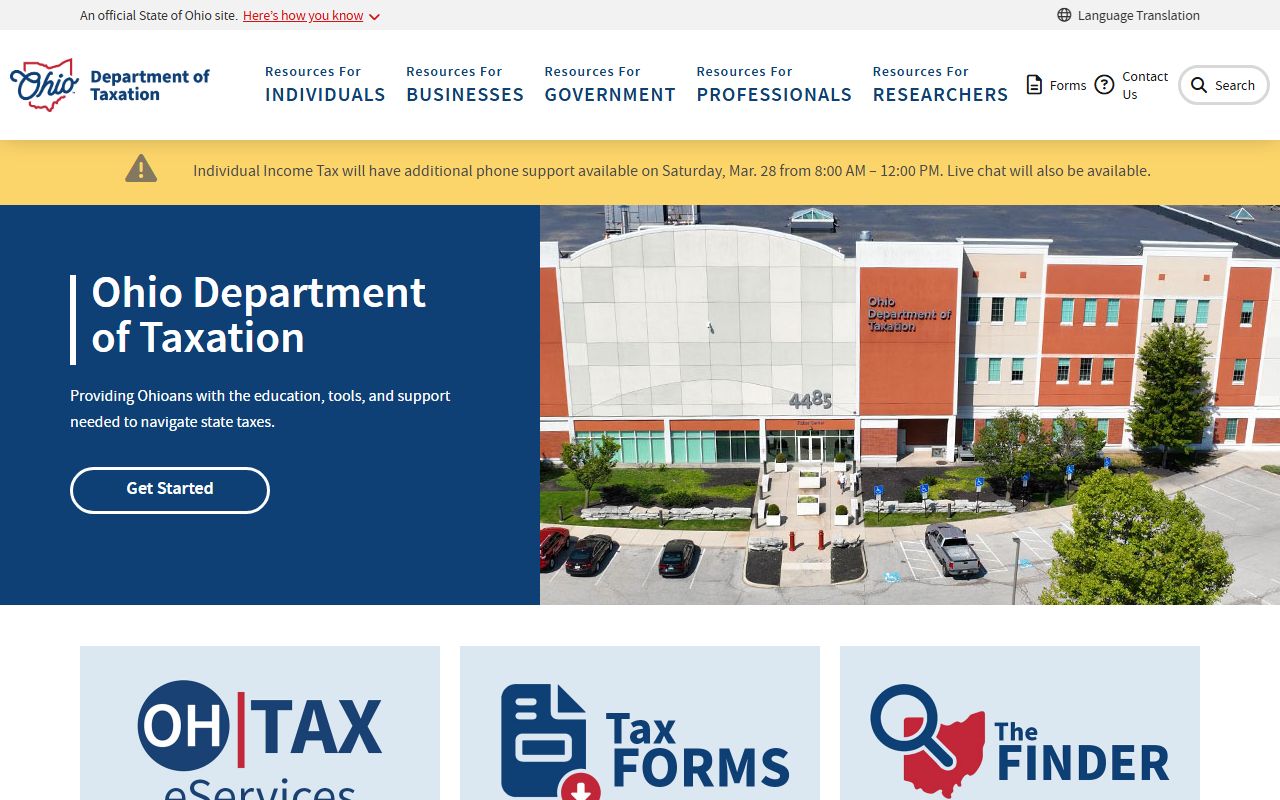
For local government officials, the local government resources page provides forms, filing deadlines, and guidance on levy administration. Property owners can visit the individual resources page for help with credits, exemptions, and payment options.
Search Ohio Property Tax Records Online
Most Ohio counties let you search property tax records on the internet. The County Auditor runs the search tool. You can usually look up a property by the owner's name, the street address, or the parcel number. Results show the assessed value, tax amount, owner on file, and sometimes the full history of past sales and payments.
Some of the bigger counties have very detailed systems. Franklin County uses a tool at property.franklincountyauditor.com where you can search by name, address, parcel ID, or even subdivision. Cuyahoga County runs the MyPlace system that shows ownership, values, and tax levy breakdowns. Hamilton County's auditor search lets you filter by sale price, transfer date, square footage, and more. Montgomery County built MCRealEstate, which gets over 61 million hits a year and even has a mobile app. Lucas County's AREIS system has been around since 1999 and won national awards.
Smaller counties have search tools too. They tend to be simpler but still cover the basics: who owns a property, what it is worth, and how much tax is owed. Some rural counties use third-party platforms like iViewTaxMaps. Either way, the data comes from the Auditor's office and is updated on a regular basis.

Note: Search tips vary by county. In Franklin County, do not use quotes in the name field, and use an asterisk as a wildcard. In Cuyahoga County, the parcel number format is XXX-XX-XXX.
Ohio Property Tax Laws
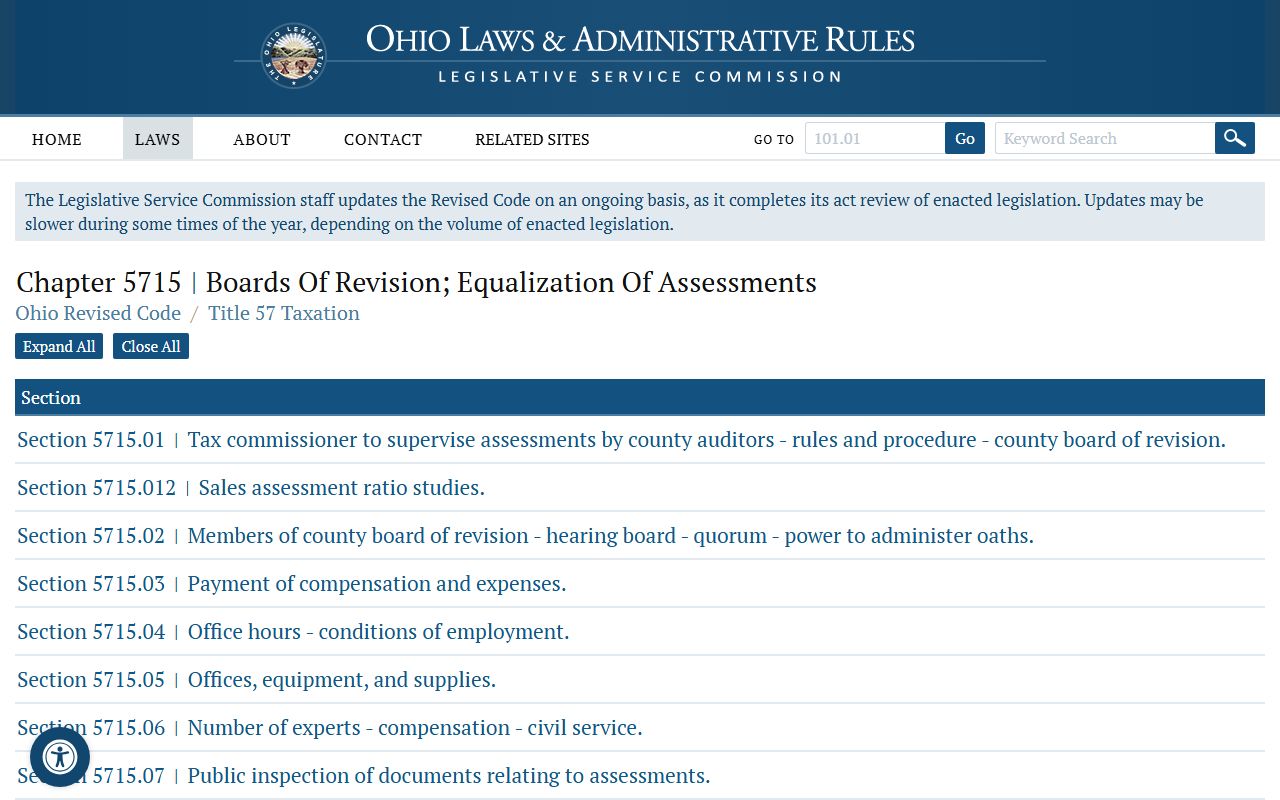
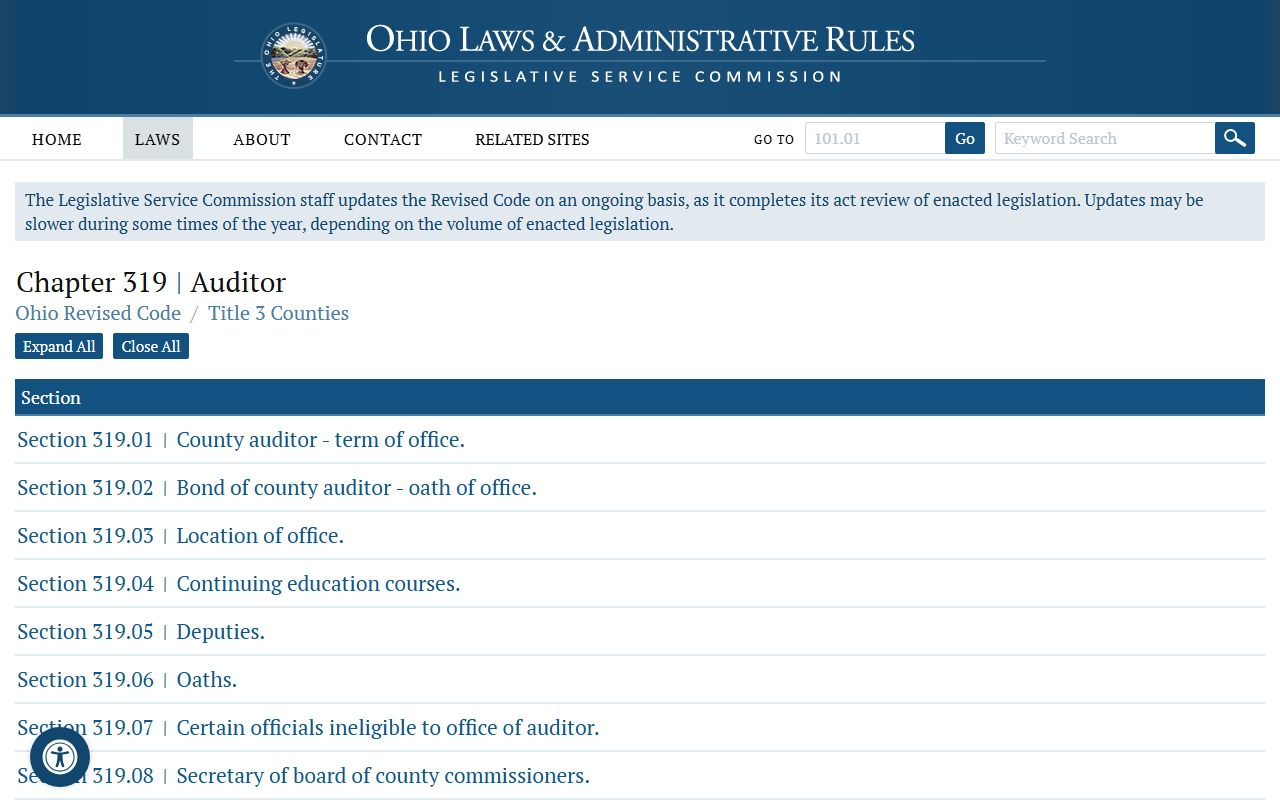
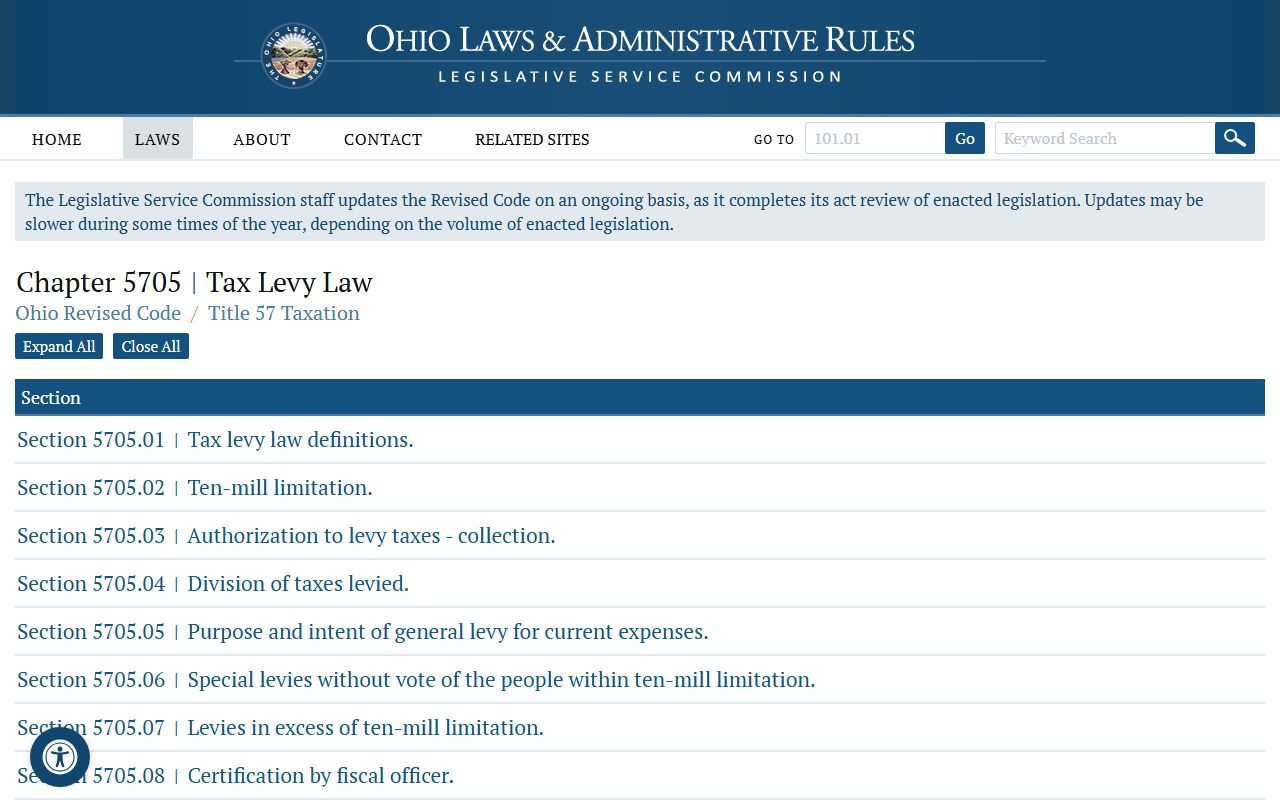
Several chapters of the Ohio Revised Code deal with property tax records and how they are created, stored, and used. The main ones are ORC Chapter 5713 on real property assessments, ORC Chapter 5715 on taxation of real property, ORC Chapter 319 on county auditor duties, and ORC Chapter 5705 on tax levies. These four chapters form the backbone of the system.
ORC 5713.01 requires county auditors to reappraise all real property every six years. ORC 5715.01 says auditors shall view and appraise all taxable real property at its true value in money. ORC 319.01 spells out the auditor's role as assessor, record keeper, and fiscal officer. ORC 323.13 sets the tax lien date. ORC 323.15 says the treasurer must mail tax bills by December 31. ORC 323.17 lays out when payments are due.
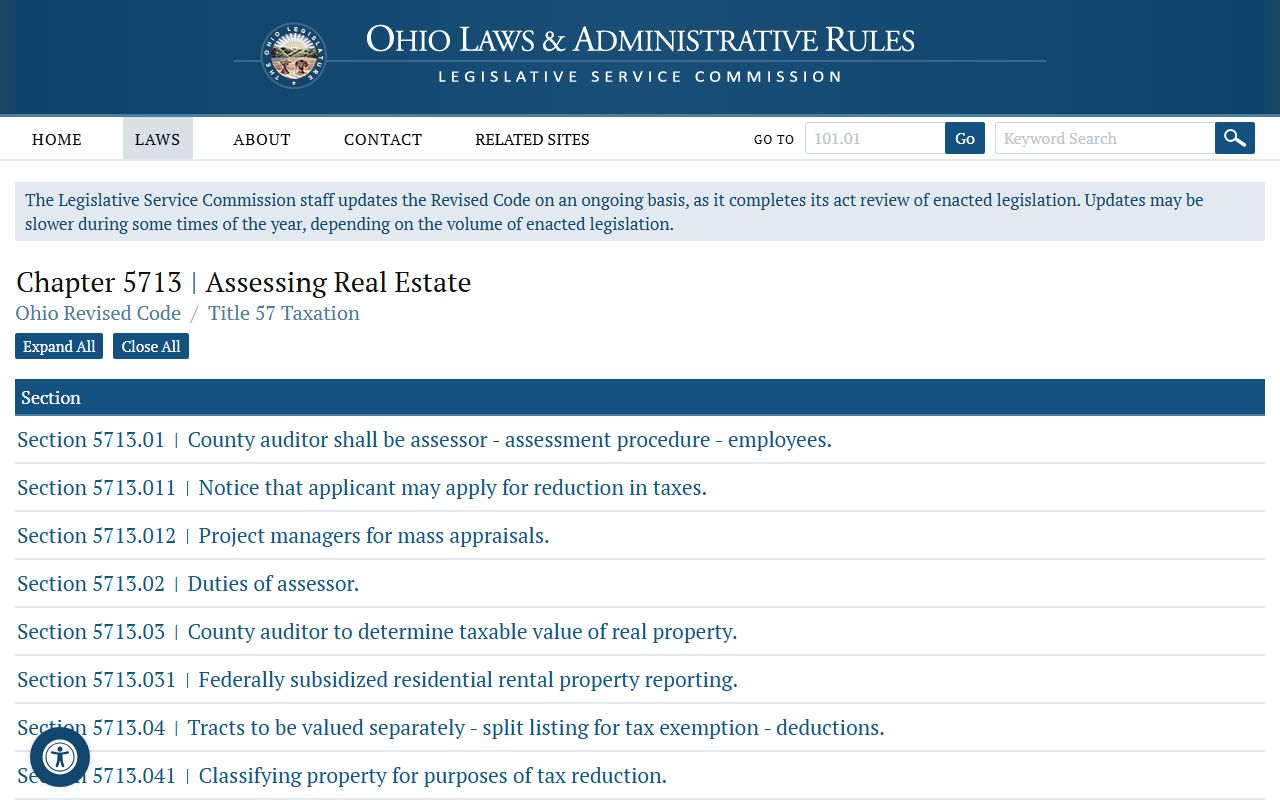
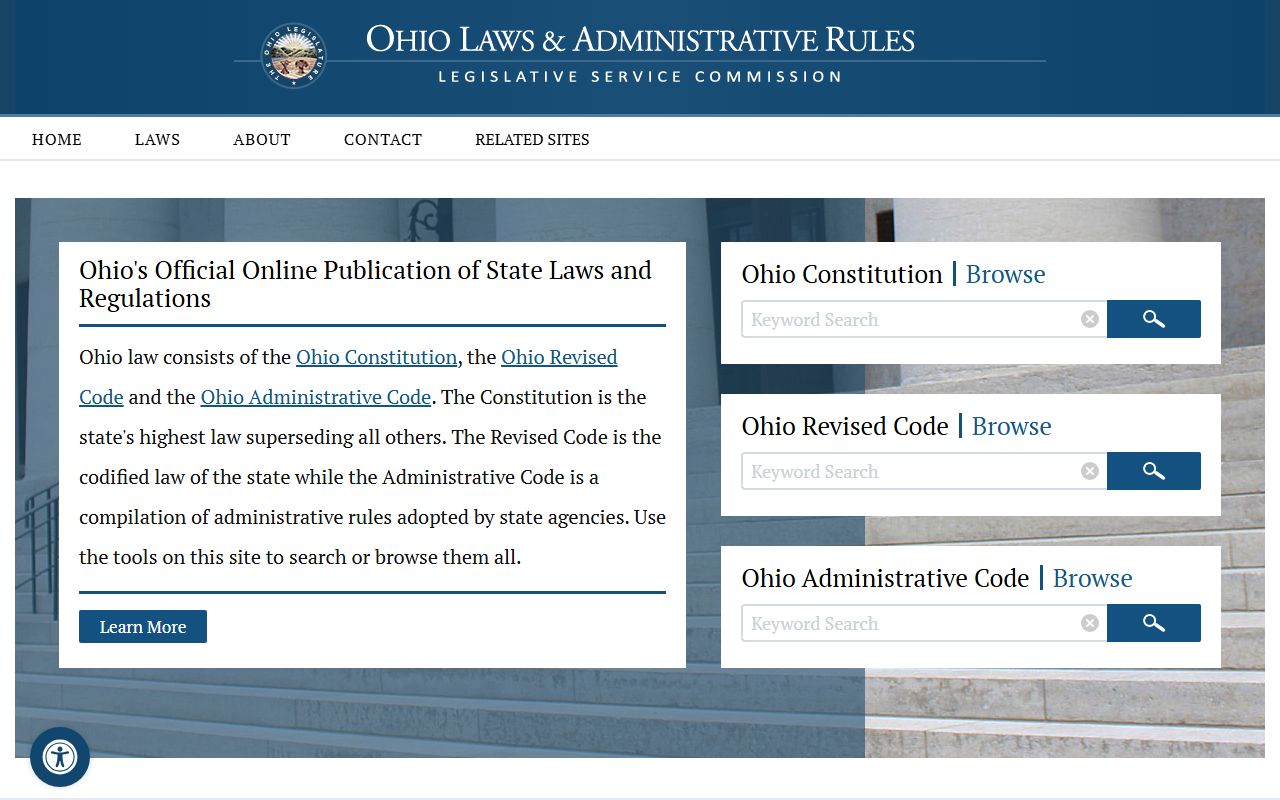
The Ohio Revised Code is available online. You can read the full text of any statute there. The site is run by the state and is free to use.
Ohio Property Tax Exemptions and Credits
Ohio has several programs that can cut your tax bill. The biggest ones are the Homestead Exemption, the Owner-Occupied Credit, and the Non-Business Credit. You apply for them through the County Auditor.
The Homestead Exemption lets seniors 65 and older and people with a permanent disability take up to $25,000 off their home's market value before taxes are figured. Disabled veterans with a 100% service-connected rating can exempt up to $50,000. You file the application once, and it stays in place as long as you own the home and meet the rules. The Owner-Occupied Credit gives a 2.5% cut on the tax bill for anyone who lives in their own home. You don't need to apply. The Non-Business Credit knocks 10% off for properties that are not used mainly for business.
Farmers can get big savings through the Current Agricultural Use Value program, or CAUV. Instead of being taxed on what the land could sell for, they get taxed on its value as farmland. For a 100-acre farm, the difference can be thousands of dollars. Ohio also has programs for forest land, energy projects, and community school properties.
Note: Homestead Exemption amounts changed in recent years. Check with your County Auditor for the latest figures and eligibility rules.
Appeal Ohio Property Tax Records
If you think your property is valued too high, you can file a complaint with the Board of Revision. The filing period runs from January 1 through March 31 each year. You use DTE Form 2, which is available at any County Auditor's office or on their website.
The Board of Revision is made up of the County Auditor, the County Treasurer, and the president of the Board of Commissioners. Under ORC 5715.19, anyone who owns property can challenge the assessed value. You need evidence to support your case. Comparable sales, a recent appraisal, or your own recent purchase price all work. The board holds hearings, usually from April through June, and issues a decision. You can only file a complaint on the same property once every three years.
If you lose at the Board of Revision, you can appeal to the Ohio Board of Tax Appeals. From there, the next step is the Ohio Supreme Court. Most cases settle at the county level, though. In Stark County, one homeowner saved $1,500 by appealing a 40% increase in their 2024 reappraisal. A retiree in Canton saved $700 a year by getting the Homestead Exemption after being told about it during an appeal hearing.
County Auditor and Treasurer Offices
Two county offices handle Ohio property tax records. The Auditor assesses and values property. The Treasurer collects taxes and tracks payments. Together they create and maintain the property tax records that the public can search.
The County Auditor serves as the chief fiscal officer and chief assessor. They determine the value of every parcel, calculate the tax for each levy, administer credits and exemptions, and keep maps that show every property boundary in the county. Under ORC Chapter 319, no other county official carries more fiscal responsibility. The Auditor also sits on the Board of Revision and the Budget Commission, which reviews tax budgets for all taxing districts.
The County Treasurer mails the bills, takes payments, and handles delinquent accounts. If taxes go unpaid, they certify the debt to the County Prosecutor for collection. In some cases, properties with unpaid taxes can end up in a lien sale or foreclosure. Payment methods vary by county. Most accept online payments. Some have drop boxes or offer automatic withdrawal plans.
The County Recorder is another office that plays a role. They keep deeds, mortgages, liens, and other documents tied to real property. Recording fees for a standard document run about $34 to $40 depending on the county. You can get copies of deeds for a small per-page fee.
Ohio Property Tax Rates and Calculation
Property tax rates in Ohio are set by the levies that voters approve. School districts, cities, townships, libraries, parks, and other agencies all place levies on the ballot. The total rate for a given parcel depends on where it sits. Two homes a mile apart can have different rates if they fall in different school districts or townships.
The basic formula is straightforward. Take the market value, multiply by 35% to get the assessed value, then multiply by the total millage rate. Divide by 1,000. That gives you the gross tax before credits and reductions. After House Bill 920 rollbacks, the owner-occupied credit, and the non-business credit, the net bill is usually lower than the gross number. Under ORC Chapter 5705, the state caps how much local governments can levy without voter approval at 10 mills for general fund purposes.
Rates vary a lot. In Summit County, the median rate sits around 1.65%. Cuyahoga County runs about 2.08%. Rural counties tend to be lower because there are fewer levies. Lake Erie waterfront properties in places like Ottawa County face different dynamics since tourism-related levies can push rates up.
Ohio Property Tax Records for Local Government
Local officials rely on property tax records for budgeting, planning, and public administration. The local government section of the Ohio Department of Taxation website provides resources they need. It has forms for certifying tax rates, instructions for processing levies, and guidelines for equalization orders.
Each county also keeps detailed GIS data tied to property tax records. In Franklin County, the open data portal makes parcel maps, boundary files, and assessment layers available for download. Summit County offers a similar setup through their GIS open data portal. Lucas County's GIS services page provides mapping tools and infrastructure data. These resources are free to use and updated regularly.
Browse Ohio Property Tax Records by County
Each of Ohio's 88 counties has its own Auditor that maintains property tax records. Pick a county to find local search tools, contact info, and tax details.
Property Tax Records in Major Ohio Cities
Residents of Ohio's bigger cities file property tax questions through their county's Auditor. Pick a city below to get local details.