
Highland County Property Tax Search
Highland County property tax records are held by the County Auditor in Hillsboro, Ohio. This south-central Ohio county has a rural character with farming communities and wooded hillsides. The auditor sets property values, keeps ownership records, and calculates tax bills for every parcel. Online search tools give you access to assessed values, tax amounts, and basic property data from home. You can also visit the courthouse in Hillsboro for help with lookups, exemption applications, or formal complaints about your assessed value.
Highland County Overview
Highland County Tax Assessments
The Highland County Auditor values all real property in the county. A full reappraisal happens every six years as required by ORC 5713. A triennial update adjusts values in the third year. Home values in Highland County are generally below the state median. Farmland and wooded parcels are common, and many are enrolled in the CAUV or Forest Land programs to reduce their tax burden.
Assessed value is 35% of market value. The tax rate depends on your school district and township. Hillsboro City Schools, Lynchburg-Clay Local, Greenfield Exempted Village, and Fairfield Local each have their own levy rates. Fire, EMS, and road levies add on top. House Bill 920 prevents existing levy collections from growing when values increase.
Searching Highland County Tax Records
The Highland County Auditor has a property search tool online. Type in an owner name, address, or parcel number to pull up records. You will see the assessed value, tax due, lot size, and building info. Sale history shows recent transfers and prices paid.
The recorder keeps deed and mortgage records. The treasurer handles payments. All three offices work together at the Highland County Courthouse in Hillsboro.
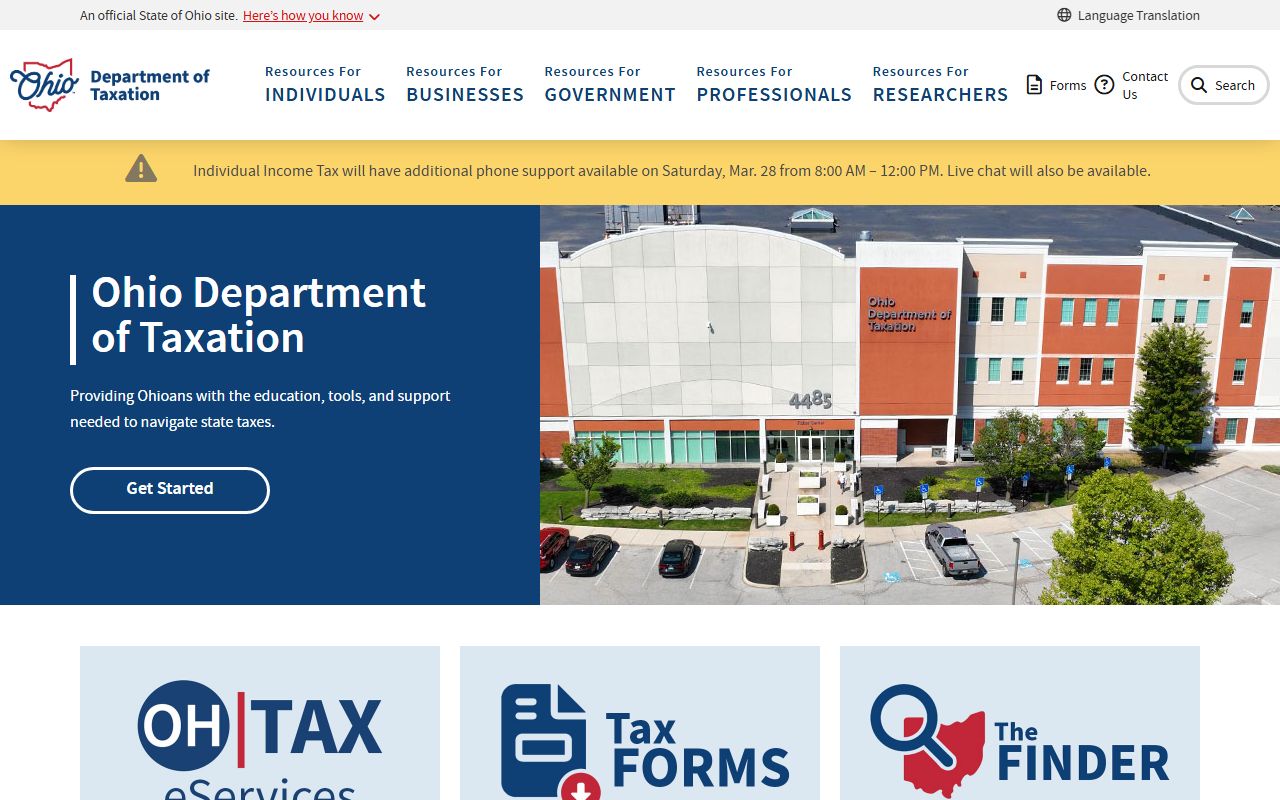
The Ohio Department of Taxation local government page has resources for county offices and property owners across the state.
Highland County Tax Relief Programs
Multiple exemptions are available to Highland County property owners. The Homestead Exemption covers up to $25,000 of market value for seniors 65 and older and permanently disabled homeowners. Veterans with 100% disability can shield up to $50,000. Apply at the auditor's office with proof of eligibility.
The Owner-Occupied Credit gives a 2.5% break. The Non-Business Credit adds 10% off for qualifying residential properties. The CAUV program helps farmers pay less by valuing land on what it produces. Highland County also has some properties enrolled in the Forest Land Tax Law, which reduces rates for qualified timber acreage.
Highland County Board of Revision
Property owners can file a complaint with the Board of Revision if they think their assessed value is too high. The filing window is January 1 to March 31. DTE Form 2 is required along with evidence. Comparable sales data or a fresh appraisal give you the best chance. The board meets in spring and sends its decision by mail.
If the board denies your complaint, you can appeal to the Ohio Board of Tax Appeals under ORC 5715. The Ohio Supreme Court is the final step. Most Highland County disputes end at the local board.
Highland County Tax Payments
The Highland County Treasurer collects all property taxes. The first half is due in late January or February. The second half is due in July. Pay at the office in Hillsboro, by mail, or online if the option is active. Penalties kick in on late payments. Interest accrues under ORC 319. Long-term delinquency leads to liens and possible foreclosure.
If you owe back taxes, talk to the treasurer about payment plans. Early contact can help you avoid the worst outcomes.
Nearby Counties
Highland County is in south-central Ohio. Neighbors include Fayette County to the north, Clinton County to the west, Brown County to the south, Adams County to the southwest, and Ross County to the east. Each county has its own auditor with property search tools.