
Erie County Property Tax Records
Erie County property tax records are managed by Auditor Rick Jeffrey in Sandusky, Ohio. The county sits on the Lake Erie shoreline and includes waterfront homes, farms, and city properties. You can search tax records online at erie.iviewtaxmaps.com, which provides parcel data, assessed values, and tax details for every property in the county. The Recorder's office, led by Barb Sessler at 247 Columbus Ave Suite 225, keeps deed and transfer records. Whether you are buying lakefront property or checking your tax bill, these tools give you what you need.
Erie County Overview
Erie County Tax Assessment Details
The Erie County Auditor appraises all real property and sets the market value. A full reappraisal happens every six years as required by ORC 5713. Triennial updates fill the gap between reappraisals. Waterfront properties along Lake Erie often carry higher values than inland parcels, which means the reappraisal process can lead to big swings for lakefront owners.
Assessed value is 35% of market value. Tax rates are set in mills and vary by school district and municipality. Sandusky City Schools, Perkins Local, Huron City Schools, and others each have their own levy rates. Fire, police, and park levies add to the total. House Bill 920 reduces rates on existing levies when values go up, but new voter-approved levies are not subject to that cap.
Searching Erie County Property Records
The primary search tool for Erie County property tax records is at erie.iviewtaxmaps.com. You can look up parcels by owner name, address, or parcel number. The system shows current assessed value, tax amount, lot size, and building details. An interactive map view lets you click on a parcel to see its data.
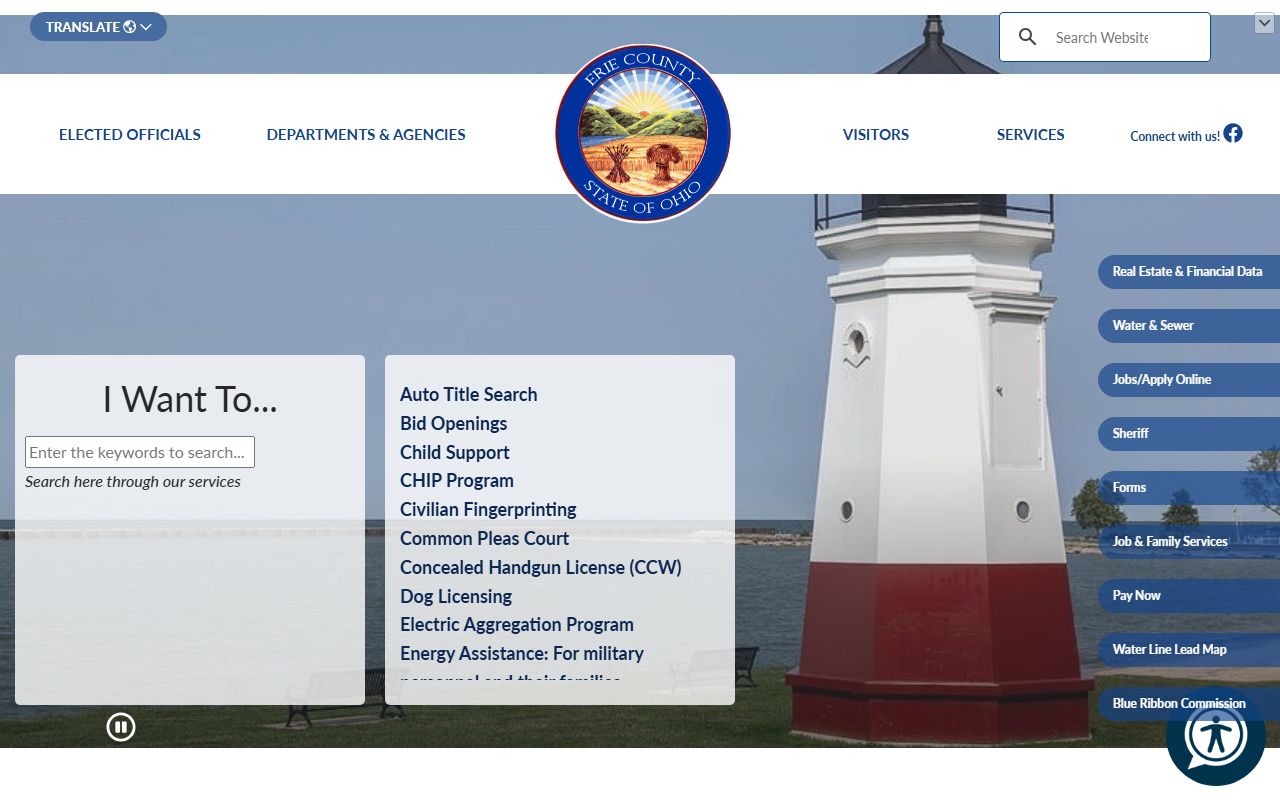
The Erie County government site links to other departments including the treasurer for payment info and the recorder for deed lookups.
If you need help with a search, call the auditor's office in Sandusky. Staff can walk you through the system or pull up records for you in person.
Erie County Tax Exemptions
Several programs can lower your Erie County tax bill. The Homestead Exemption lets seniors 65 and older or permanently disabled homeowners exempt up to $25,000 of market value. Apply at the auditor's office with proof of eligibility. Disabled veterans with a 100% service-connected rating may exempt up to $50,000.
The Owner-Occupied Credit gives a 2.5% break. The Non-Business Credit provides a 10% rollback for residential properties. Farm owners can enroll in CAUV to get their land taxed on agricultural productivity rather than market sale price. This is common in the southern parts of Erie County where there is more farmland.
Board of Revision in Erie County
You can challenge your property value at the Board of Revision. File between January 1 and March 31 using DTE Form 2. Bring comparable sales data from your area. The board meets in the spring to hear cases. It has three members: the auditor, treasurer, and a county commissioner.
If the board denies your complaint, you can appeal to the Ohio Board of Tax Appeals under ORC 5715. That process takes longer but gives you another chance. Most Erie County cases are settled at the local level.
Erie County Tax Payment
The Erie County Treasurer collects property taxes twice a year. The first half is due in late January or early February. The second half comes due in July. You can pay at the treasurer's office in Sandusky, by mail, or through online payment if available. Late payments trigger penalties and interest charges. Extended non-payment can lead to a tax lien and eventual foreclosure under ORC 319.
The treasurer can also tell you about any special assessments on your property. In Erie County, these might include sewer, water, or sidewalk improvements in certain districts.
Erie County Property Tax Rates
Tax rates across Erie County range depending on your location. Properties in Sandusky city limits face a different mill rate than those in rural townships. School levies make up the bulk of most tax bills here. Sandusky City Schools, Perkins Local Schools, Huron City Schools, and Margaretta Local each have their own rates approved by voters. Fire and EMS levies cover emergency services. Road levies fund township maintenance.
The effective tax rate in Erie County typically falls between 1.5% and 2.0% of assessed value when you add up all levies. Under ORC Chapter 5705, most new levies require voter approval. The auditor certifies the rates each year and applies them to every parcel based on its tax district. Understanding your district code is key to knowing exactly what rate you pay.
Erie County Property Types
Erie County has a wide variety of property types. Lake Erie waterfront homes and cottages carry premium values. Properties on the islands and along the shore are often seasonal or vacation homes. The auditor must classify these correctly to apply the right tax credits. Seasonal homes may not get the Owner-Occupied Credit since the owner does not live there year-round. Commercial properties related to the tourism industry also face unique valuation issues. Farms in the southern part of the county benefit from CAUV enrollment.
Nearby Counties
Erie County borders Lake Erie to the north. Neighboring counties include Huron County to the south, Sandusky County to the southwest, and Lorain County to the east. Ottawa County sits to the west along the lakeshore. Each county has its own auditor office with property search tools.