
Wyandot County Tax Record Search
Wyandot County property tax records are maintained by the county auditor in Upper Sandusky. This small, rural county sits in north-central Ohio and is named after the Wyandot people who once lived in the area. The auditor's office tracks all real property parcels, sets assessed values, and processes tax exemption applications. Farmland covers most of Wyandot County, so the Current Agricultural Use Value program has a major impact on tax bills here. Upper Sandusky is the county seat and largest community. You can search for property records by parcel number, owner name, or address through the auditor. The Ohio Department of Taxation sets the statewide rules that guide property assessments in Wyandot County and all 88 Ohio counties.
Wyandot County Overview
Wyandot County Assessment Process
The Wyandot County Auditor sets the value of all real property in the county. Under ORC Chapter 319, the auditor must view and appraise every parcel at its true value. Most parcels in Wyandot County are agricultural, with residential properties concentrated in Upper Sandusky, Carey, and a few smaller villages. Commercial property is limited compared to more urban Ohio counties. The auditor's office is in the courthouse in Upper Sandusky.
After the auditor sets market value, Ohio's 35% assessment rate is applied. That gives you the assessed value, which is what your tax bill is calculated from. Reappraisals take place every six years, and a triennial update happens at the midpoint. Between those events, your assessed value stays the same unless you build an addition, put up a new structure, or make other changes to the property. House Bill 920 reduction factors help keep your tax bill from jumping too much after a reappraisal by adjusting the effective rate on existing levies downward.
The CAUV program is especially relevant in Wyandot County. Nearly all of the farmland here is enrolled. Under CAUV, agricultural land is taxed based on what it can produce rather than what it would sell for on the open market. This lowers the assessed value of farm parcels significantly, sometimes by 80% or more. The auditor calculates CAUV values each year using soil productivity data from the state.
Finding Wyandot County Property Tax Records
The Wyandot County Auditor's office provides property record lookups. You can search by parcel number, owner name, or property address. Each record includes the owner's name, mailing address, parcel ID, legal description, lot size, land use classification, land value, building value, total assessed value, and current tax amounts. The tax district code is also shown, which determines the mill rate for that parcel.
The Ohio Department of Taxation website has general resources about property tax law and programs that apply in all Ohio counties, including Wyandot. It can be a helpful resource if you need background information on how the assessment system works statewide.
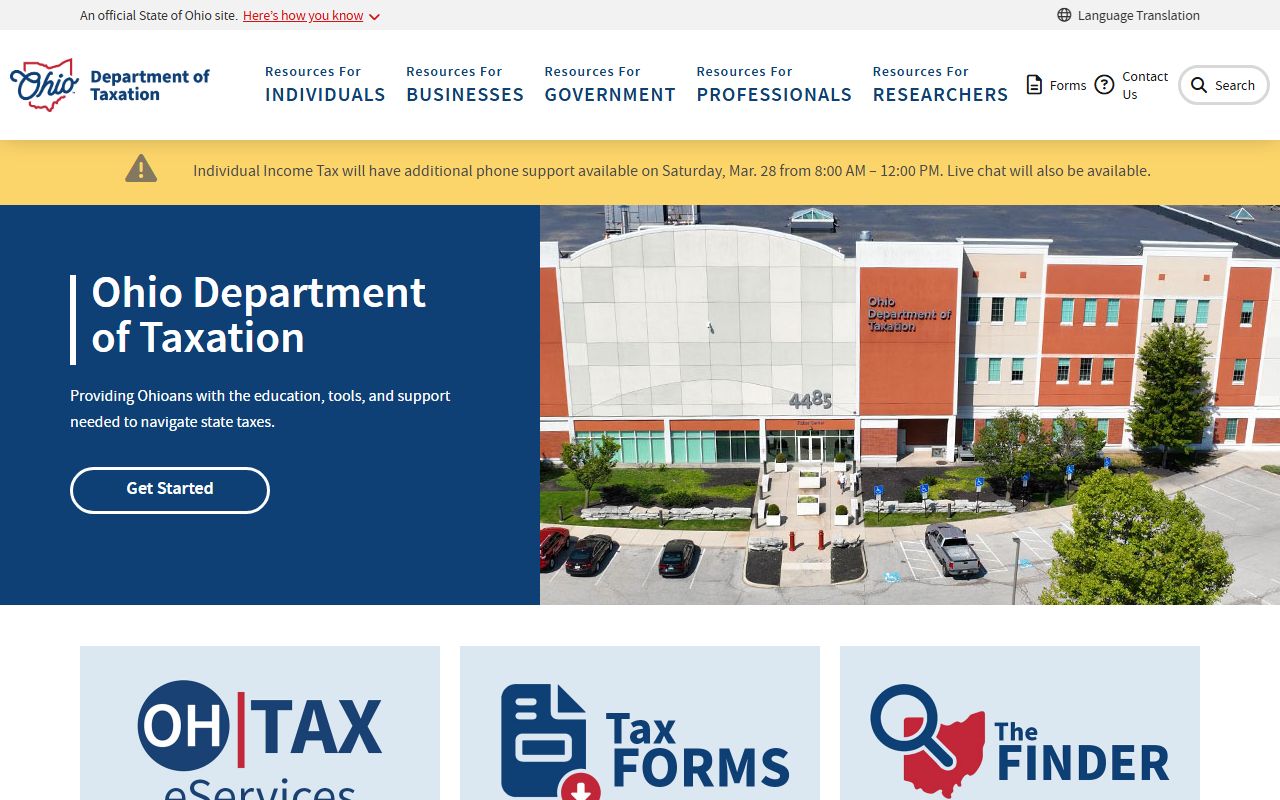
Ohio's statewide tax resources apply to Wyandot County property owners. The Department of Taxation site covers reappraisal schedules, CAUV rules, exemption eligibility, and the appeals process.
Tax Rates and Payments in Wyandot County
Property tax rates in Wyandot County are measured in mills. One mill is one dollar per thousand dollars of assessed value. School district levies make up the biggest portion of most tax bills in the county. Fire, township, library, and other local levies add to the total. Each tax district has its own combination, so rates differ depending on where your property is located. Upper Sandusky properties generally face higher total mill rates than rural township parcels because of city and school levies.
Wyandot County property taxes are due twice a year. The first half is typically due in February. The second half is due in July. The Wyandot County Treasurer handles all collections. You can pay at the courthouse in Upper Sandusky or by mail. Check with the treasurer for any online payment options. Missing a payment deadline triggers penalties and interest under ORC Chapter 5715. Extended delinquency can lead to a tax lien on the property.
Tax Exemptions for Wyandot County Owners
Wyandot County property owners can take advantage of several tax relief programs. The homestead exemption allows seniors 65 and older or permanently disabled residents to reduce their taxable value by up to $25,000. Disabled veterans with a 100% service-connected rating can exempt up to $50,000 from their property's assessed value. Applications go through the auditor's office in Upper Sandusky.
The CAUV program is the biggest tax relief tool in Wyandot County. With so much farmland, CAUV enrollment affects a large portion of the county's total parcel count. Agricultural parcels of ten or more acres typically qualify. Smaller parcels can qualify if they meet income requirements under ORC Chapter 5713. The auditor uses soil maps, crop types, and yield data from the Ohio Department of Taxation to set CAUV values.
- Homestead exemption up to $25,000 for seniors and disabled residents
- Enhanced homestead for disabled veterans with 100% service-connected rating
- CAUV program for qualifying agricultural land
- Owner-occupied credit of 2.5% on primary residences
- Non-business credit providing a 10% rollback for residential property
Note: The owner-occupied and non-business credits are applied automatically if the auditor has your property flagged correctly.
Wyandot County Board of Revision
If you believe your property's assessed value is too high, you can challenge it through the Wyandot County Board of Revision. The complaint window is January 1 through March 31 each year. You will need DTE Form 2, plus evidence like comparable sales data or a recent appraisal from a licensed appraiser. The board meets at the courthouse in Upper Sandusky, and hearings are usually scheduled between April and June.
There is no filing fee. The burden of proof rests on you to show the auditor's value is incorrect. If the board does not rule in your favor, you can appeal to the Ohio Board of Tax Appeals. Under ORC Chapter 5705, the appeals process provides a clear path for property owners who disagree with their assessment. In a small county like Wyandot, the board members are often familiar with local property conditions, which can work in your favor if you present strong evidence.
Wyandot County Communities
Upper Sandusky is the county seat and the main population center. Carey is the other notable community in the county. Both have their own tax districts with separate levy structures. The rest of Wyandot County is made up of rural townships where farming dominates the landscape. Property values in the county tend to be modest compared to Ohio's metro areas, but local levies can still result in meaningful tax bills. Each community has its own set of school and local service levies that shape the total rate for properties in that area.
Nearby Counties
Wyandot County borders several other Ohio counties. These links may be useful if you own property near a county line or want to compare assessment practices.