
Find Williams County Tax Records
Williams County property tax records are managed by the county auditor in Bryan. This northwestern Ohio county sits at the corner where Ohio meets Indiana and Michigan. The auditor's office handles all property assessments, tax calculations, and exemption applications for the county. Farmland dominates the landscape here, and the Current Agricultural Use Value program is widely used. You can search for property records by parcel number, owner name, or address through the auditor's office. Bryan is the county seat and largest city. The Ohio Department of Taxation oversees the statewide framework that guides how Williams County assesses and taxes real property. Residents with questions can reach the auditor's office in the county courthouse in Bryan.
Williams County Overview
Williams County Tax Assessments
The Williams County Auditor is responsible for setting the value of all real property in the county. Under ORC Chapter 319, the auditor must view and appraise every parcel at its true value. Williams County is primarily agricultural, with row crops covering most of the land. Residential parcels are concentrated in Bryan, Montpelier, Edgerton, and a handful of smaller villages. Commercial and industrial properties are scattered but limited compared to urban Ohio counties.
Once the auditor sets market value, Ohio's 35% assessment rate is applied. That assessed value is what gets taxed. Reappraisals happen every six years. A triennial update occurs at the three-year mark. Between cycles, your value stays the same unless you build something new or make significant improvements. House Bill 920 reduction factors kick in after a reappraisal to offset value increases on existing levies. New levies are not subject to HB 920, so those can still raise your bill.
Agricultural land enrolled in CAUV gets taxed at a much lower rate than its full market value. In a county like Williams, where farming is the main land use, this program has a huge effect on the overall tax base. The auditor uses soil maps and crop yield data from the Ohio Department of Taxation to calculate CAUV values each year.
Searching Williams County Property Tax Records
The Williams County Auditor's office provides access to property records. You can look up parcels by owner name, address, or parcel number. Each record shows the owner's name, mailing address, parcel ID, legal description, lot size, land value, building value, total assessed value, and current tax amounts. The tax district is also listed, which tells you which mill rate applies to that parcel.
The Ohio Department of Taxation website has general information about property tax rules that apply across all 88 counties, including Williams. If the county auditor's site does not answer your question, the state site is a good backup resource.
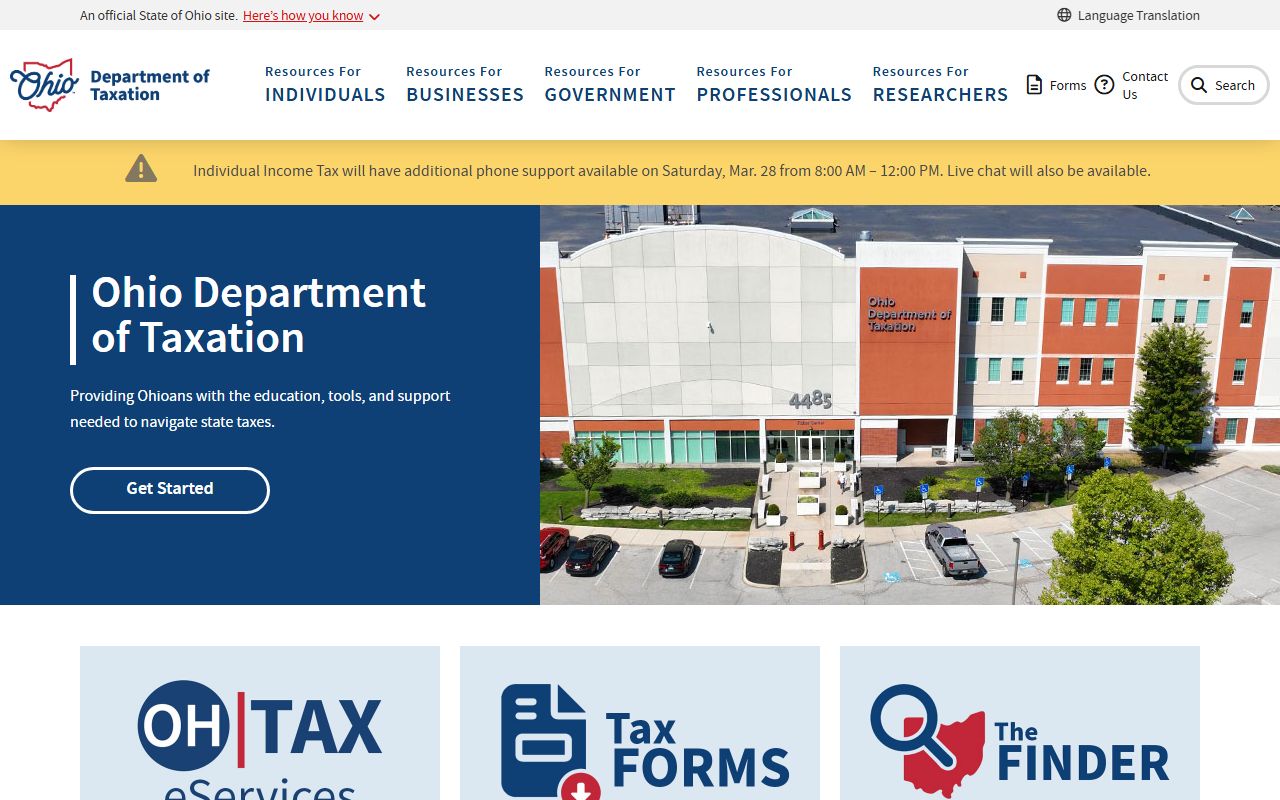
Ohio's statewide property tax resources provide context for how Williams County assessments fit into the broader system. The state site covers reappraisal schedules, exemption rules, and appeal procedures that apply in every county.
Williams County Tax Rates and Payment
Tax rates in Williams County are measured in mills. One mill equals one dollar per thousand dollars of assessed value. School levies are typically the largest share of any tax bill. Fire, library, and township levies add to the total. Each tax district in Williams County has its own combination of levies, so rates can differ from Bryan to Montpelier to the rural townships.
Property taxes in Williams County are due in two installments. The first half is due in February and the second half in July. The Williams County Treasurer collects all payments. You can pay in person at the courthouse in Bryan, by mail, or check with the treasurer's office for online options. Missing a deadline means interest and penalties begin to add up under ORC Chapter 5715. If taxes go unpaid long enough, the county can place a lien on the property and eventually pursue a tax sale.
The 2.5% owner-occupied credit and 10% non-business credit help reduce bills for homeowners who live in their property. Make sure the auditor has your occupancy status correct to get these credits.
Property Tax Exemptions in Williams County
Williams County residents can apply for several tax relief programs. The homestead exemption reduces taxable value by up to $25,000 for seniors 65 and older or permanently disabled residents. Disabled veterans with a 100% service-connected rating can exempt up to $50,000. The auditor's office in Bryan handles all applications.
The CAUV program is the most impactful exemption in Williams County. Farmland that qualifies gets taxed on its production value instead of full market value. This can cut the assessed value of a farm parcel dramatically. If you own agricultural land in Williams County and have not applied for CAUV, you should contact the auditor. The program requirements are set under ORC Chapter 5713, and you need at least ten acres devoted to agricultural production or meet minimum income thresholds on smaller parcels.
- Homestead exemption up to $25,000 for qualifying seniors and disabled residents
- Enhanced homestead for disabled veterans
- CAUV program for agricultural land
- Owner-occupied credit of 2.5%
- Non-business credit (10% rollback)
Board of Revision in Williams County
If you think your assessed value is wrong, file a complaint with the Williams County Board of Revision. The filing period runs January 1 through March 31. You need DTE Form 2 and evidence to support your claim. Comparable sales from your area or a recent appraisal from a licensed appraiser are the best forms of evidence. The board meets at the courthouse in Bryan.
Hearings typically take place between April and June. Filing is free. If you are not satisfied with the board's decision, you can appeal to the Ohio Board of Tax Appeals. That decision can then go to the Ohio Supreme Court if needed. Most cases are resolved at the local level, though. Under ORC Chapter 5705, the process is designed to give property owners a fair chance to challenge their valuation.
Note: You only need to file once every three years for the same property unless there is a new reappraisal.
Williams County Communities
Bryan is the county seat and the largest city in Williams County. Montpelier and Edgerton are smaller communities with their own tax districts. The county borders Indiana to the west and Michigan to the north, which means some residents work or do business across state lines. Property values in Williams County tend to be lower than in Ohio's metro areas, but tax rates can still be significant depending on local levies. Each village and township has its own set of school, fire, and municipal levies that shape the total tax bill for properties in that area.
Nearby Counties
Williams County borders several Ohio counties. These links can help if you own property near a county line or want to compare rates in the region.