
Belmont County Tax Records
Belmont County property tax records are maintained by the county auditor in St. Clairsville, Ohio. Located in eastern Ohio along the Ohio River and the I-70 corridor, Belmont County has a mix of residential, commercial, and rural property. The county borders West Virginia to the east. Property owners can search for assessed values, tax payment history, and parcel information through the auditor's office. Whether you own a home in St. Clairsville, Martins Ferry, or one of the rural townships, the Belmont County Auditor handles all property tax assessments and records.
Belmont County Overview
Belmont County Property Assessments
The Belmont County Auditor sets the market value for all real property. Homes, farms, businesses, and vacant land are all assessed. Under ORC Chapter 319, the auditor acts as the chief assessor. Market values are based on sales data, property features, and location. Properties along the Ohio River or near the I-70 corridor may be valued differently than those in more remote townships.
Ohio requires a full reappraisal every six years. The Belmont County Auditor also does triennial updates between reappraisals. During a full reappraisal under ORC Chapter 5713, appraisers may inspect properties and review building details. Triennial updates use recent sales and market trends to adjust values. After the auditor sets the market value, the assessed value is calculated at 35%. That is the number your tax bill is based on.
Search Belmont County Tax Records
You can search Belmont County property tax records by owner name, property address, or parcel number. Each record shows the owner, mailing address, parcel ID, and legal description. The land value, building value, and total market value are all listed. Tax amounts, payment history, and delinquent balances are included.
The Belmont County Auditor's office in St. Clairsville can assist with record lookups. Staff can pull up any parcel in the county and provide copies of records. The Ohio Department of Taxation sets the statewide framework, while the local auditor handles day-to-day administration. If you need deed information or transfer records, the county recorder's office is the right place for that.
Belmont County property tax records are governed by Ohio state law. The screenshot below shows the Ohio Revised Code page that outlines taxation rules for real property statewide.
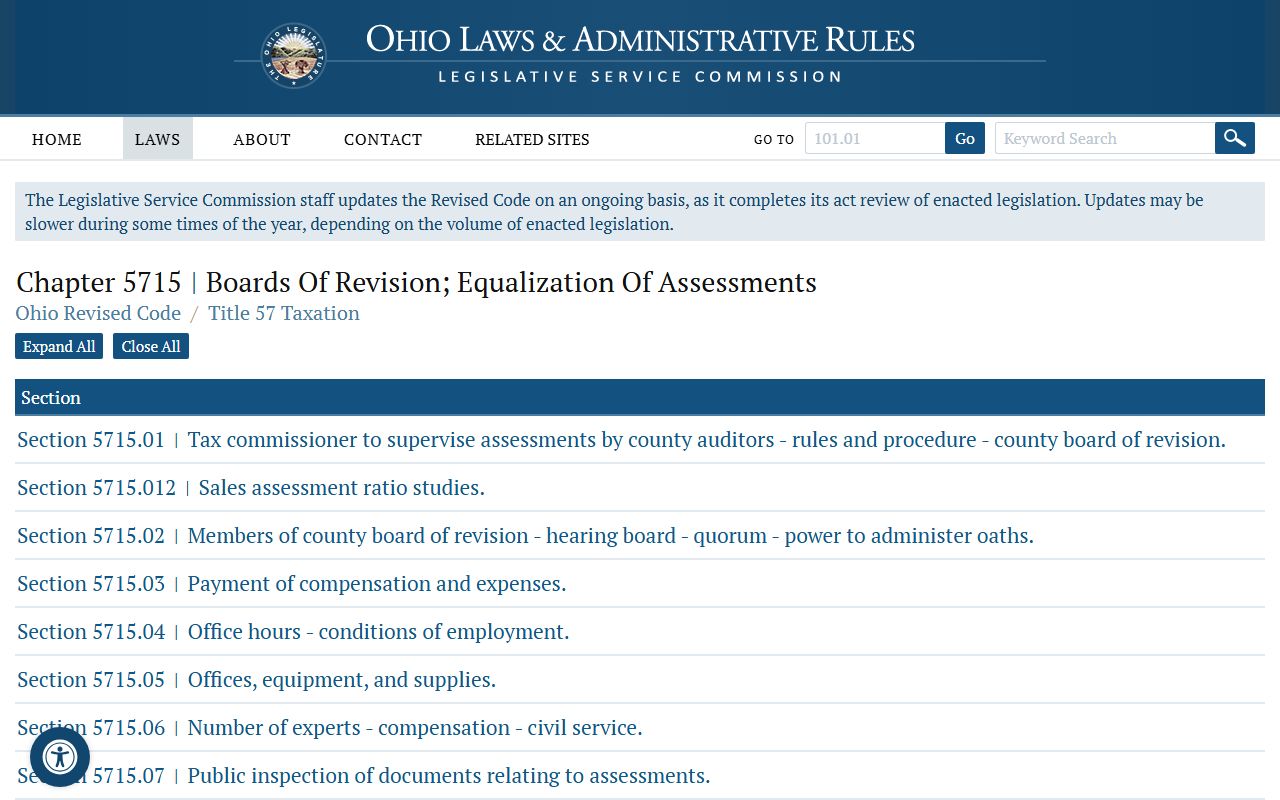
These statutes set the rules that the Belmont County Auditor and Treasurer follow when assessing and collecting property taxes.
Belmont County Tax Rates
Tax rates vary by district in Belmont County. Each school district, village, and township has levies that combine into your total rate. Mills are the unit. One mill is one dollar for every thousand dollars of assessed value. School levies typically make up the biggest piece of the bill. Fire, library, and county levies add to the total.
House Bill 920 prevents tax bills from jumping too much after a reappraisal. The auditor calculates reduction factors for existing levies when property values go up. This keeps the revenue from those levies roughly steady. New levies approved by voters are not subject to HB 920 rollbacks. ORC Chapter 5705 covers the authority for local levies and how rates are certified each year.
Note: Belmont County properties near the Ohio River may fall in different tax districts than those along the I-70 corridor.
Belmont County Exemptions and Credits
Belmont County residents can apply for property tax exemptions at the auditor's office. The homestead exemption is for seniors 65 and over or permanently disabled homeowners. It takes up to $25,000 off your market value before taxes are calculated. Veterans with 100% service-connected disabilities get up to $50,000 off.
The owner-occupied credit knocks 2.5% off your tax bill if you live in the property. The non-business credit gives a 10% rollback for residential property not used mainly for business. Farmers can apply for CAUV, which values agricultural land based on what it can produce. For Belmont County's rural areas, CAUV is an important program. Oil and gas properties have separate valuation rules, and the auditor can explain how those work if you own mineral rights or surface rights on active wells.
- Homestead exemption of up to $25,000 for seniors and disabled homeowners
- Enhanced homestead of up to $50,000 for disabled veterans
- Owner-occupied credit of 2.5% on primary residence bills
- Non-business credit (10% rollback) for qualifying homes
- CAUV for agricultural land in the county
Paying Belmont County Taxes
The Belmont County Treasurer sends tax bills in December each year. First half payments are due in February. Second half is due in July. Pay at the treasurer's office in St. Clairsville, by mail, or online if the county offers that option.
Missing a deadline means penalties. Ohio law allows a 10% penalty plus annual interest on late taxes. Under ORC Chapter 5715, delinquent taxes can lead to a lien on your property. Extended non-payment may result in a tax sale. The treasurer's office can explain your options if you fall behind.
Filing Tax Appeals
Belmont County property owners who disagree with their assessed value can file a complaint with the Board of Revision. The window runs from January 1 through March 31. You file using DTE Form 2 and must bring evidence. Comparable sales from the area, a recent professional appraisal, or documentation showing property defects all work.
The board includes the county auditor, treasurer, and a commissioner. Hearings take place in the spring. If you disagree with the board's decision, you can appeal to the Ohio Board of Tax Appeals. Most property owners resolve their disputes at the county level with the right evidence.
Nearby Counties
Belmont County is in eastern Ohio near the West Virginia border. These nearby counties may be useful for comparison or if you own property across county lines.