
Ashland County Tax Record Search
Ashland County property tax records can be searched through the county auditor's office in the city of Ashland. This north-central Ohio county is mostly rural, with small cities and townships making up the landscape. The auditor maintains highway and municipality maps that tie into property data. If you need to find a tax bill, check an assessed value, or look up who owns a parcel, the Ashland County Auditor is where you start. Property records here cover homes, farms, commercial buildings, and vacant land across the county.
Ashland County Overview
Ashland County Assessment Process
The Ashland County Auditor is responsible for assessing all real property. This includes setting the market value for every parcel in the county. Ohio law under ORC Chapter 5713 requires a full reappraisal every six years. A triennial update happens three years after each reappraisal. These cycles make sure values stay current with the market.
When the auditor completes a reappraisal, values can go up or down depending on sales trends. Ashland County has a mix of agricultural land, small-town homes, and some commercial property. Farm values tend to move slower than residential ones. The auditor's staff may visit properties during a full reappraisal. During a triennial update, they rely more on sales data and market analysis. Either way, your assessed value is 35% of whatever market value the auditor assigns to your property.
The Ashland County Auditor also maintains highway and municipality maps. These maps show property boundaries and can be useful when checking lot lines or verifying parcel locations. Maps and property data are linked, so you can often find tax information by looking at a specific area on the map.
Note: Ashland County property owners receive notice when their assessed value changes during a reappraisal or triennial update.
Searching Property Tax Records
Ashland County property tax records include ownership details, assessed values, and tax payment history. You can search by owner name, property address, or parcel number. Each record shows the owner's name, mailing address, and parcel ID. The legal description and lot size are also part of the record.
Values are broken down into land value and building value. The total gives you the market value, and the assessed value is 35% of that. Tax amounts due, payment dates, and any delinquent balances show up on the record as well. The Ohio Department of Taxation provides statewide guidance on how these records work. At the local level, the Ashland County Auditor maintains the data and makes it available to the public.
The Ashland County property tax portal connects to state systems that govern Ohio property tax records. Here is the Ohio Revised Code page covering county auditor duties that apply to Ashland County.
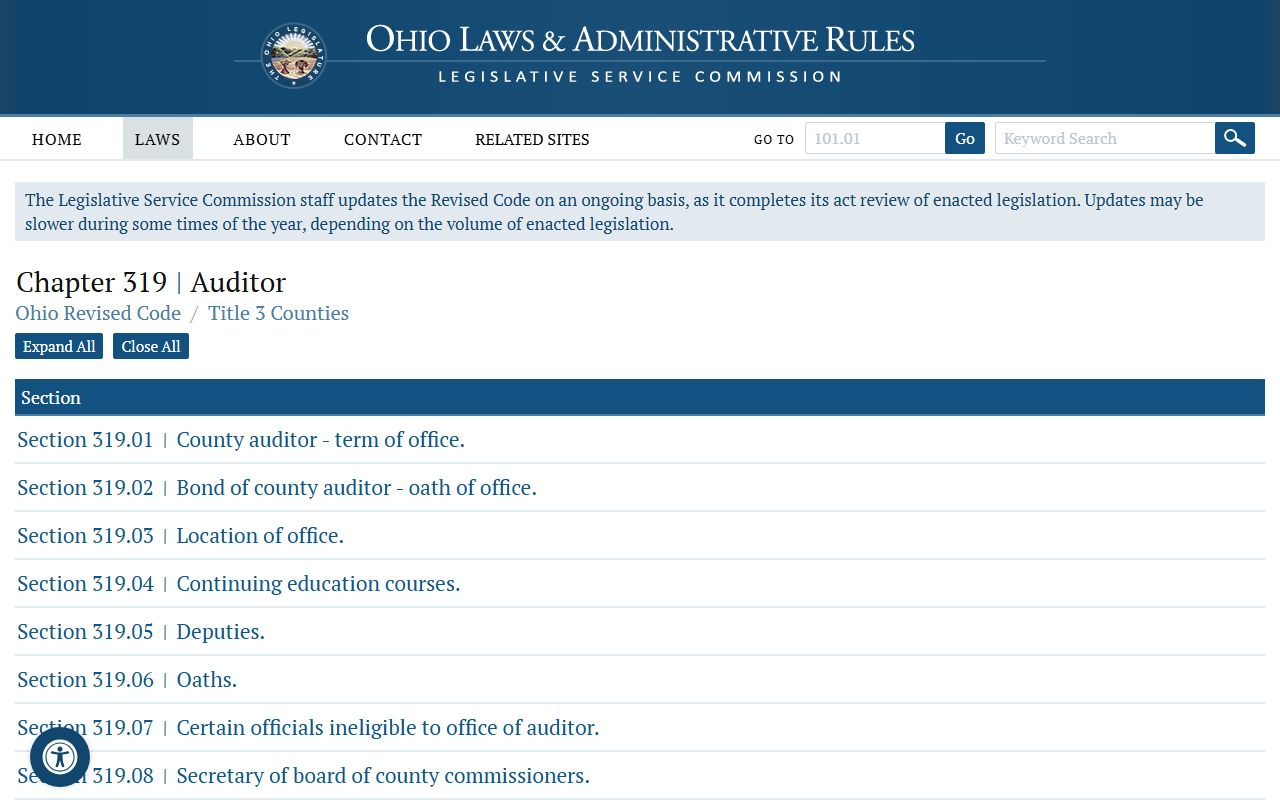
This statute page explains the legal basis for how the Ashland County Auditor manages property assessments and tax records for all parcels.
Ashland County Tax Rates
Tax rates in Ashland County vary by district. Each school district, township, and municipality has its own set of levies. Your total tax rate is the sum of all levies that apply to your parcel. Rates are measured in mills, where one mill is one dollar per thousand dollars of assessed value.
House Bill 920 plays a role here. When property values increase during a reappraisal, HB 920 reduction factors lower the effective rate on existing levies. This keeps revenue roughly the same for taxing authorities and prevents big spikes in your bill just because values went up. New levies voted in after a reappraisal are not subject to HB 920 adjustments. The rules for levy authority fall under ORC Chapter 5705, which the Ashland County Auditor uses when certifying rates each year.
Tax Exemptions in Ashland County
Several property tax exemptions are available to Ashland County residents. The homestead exemption is the most widely used. It lets homeowners age 65 and over, or those with a permanent disability, exempt up to $25,000 of their home's market value. Disabled veterans with a 100% service-connected disability can exempt up to $50,000.
Farmers in Ashland County should look into the CAUV program. CAUV stands for Current Agricultural Use Value. It taxes qualifying farmland at its production value instead of its market value. This is a big deal for a rural county like Ashland. The savings can be substantial, especially for larger farms. The auditor reviews CAUV applications annually. The owner-occupied credit (2.5%) and non-business credit (10% rollback) also apply to most residential properties in the county.
- Homestead exemption for seniors and disabled homeowners
- Enhanced homestead for 100% disabled veterans
- CAUV for qualifying agricultural land
- Owner-occupied credit at 2.5%
- Non-business credit at 10%
Paying Ashland County Taxes
The Ashland County Treasurer collects all property taxes. Bills are mailed each December. First half is due in February. Second half is due in July. You can pay at the treasurer's office in Ashland or by mail. Check if the county offers online payments as well.
Late payments trigger penalties and interest. Ohio law allows the treasurer to charge a 10% penalty plus interest on delinquent taxes. If taxes remain unpaid, the county can place a lien on the property and eventually initiate foreclosure proceedings. Contact the treasurer early if you need help with a payment plan. The ORC Chapter 5715 outlines the rules for delinquent tax enforcement across Ohio.
Appeals and Board of Revision
Ashland County property owners can challenge their assessed value through the Board of Revision. File a complaint between January 1 and March 31 using DTE Form 2. You need evidence that your value is wrong. Comparable sales, a recent appraisal, or documentation of property defects all count.
The board holds hearings in the spring. It consists of the county auditor, treasurer, and a county commissioner. Decisions can be appealed to the Ohio Board of Tax Appeals. Most cases resolve at the local level. The Ohio Revised Code sets the rules for how these hearings work and what evidence is accepted.
Nearby Counties
Ashland County is surrounded by several Ohio counties. If you own property near the border, these pages can help you compare tax information.